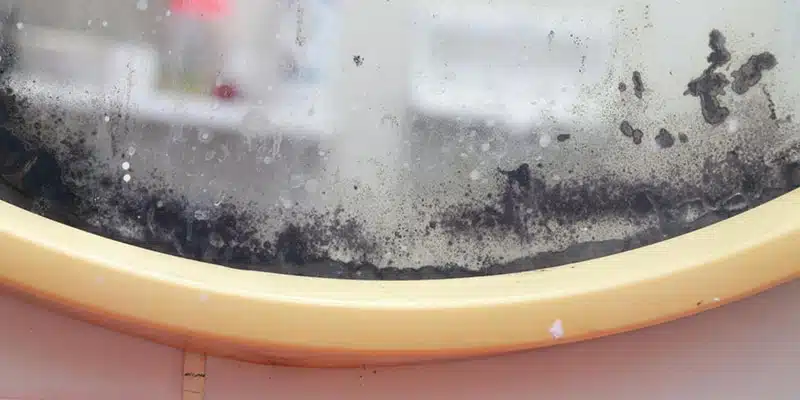
Those dark patches creeping across your bathroom mirror are not mold, dirt, or something you can wipe away. Why do mirrors get black spots? The answer is desilvering, a permanent chemical breakdown of the reflective silver layer hidden behind the glass. Once the silver converts to black silver sulfide, no cleaning product can reverse it.
Desilvering affects most bathroom mirrors eventually, typically starting at the edges and spreading inward over months or years. High humidity, poor ventilation, and harsh cleaning products all accelerate the process. Mirrors in kitchens and entryways can also develop spots, but bathrooms account for the vast majority of cases due to daily steam exposure.
This guide covers the chemistry driving the reaction, why edges blacken first, what interior spots reveal about your mirror’s condition, and whether resilvering or replacing makes more financial sense.
What’s Actually Inside Your Mirror (And What Breaks Down)
A mirror is not a single sheet of reflective material. It is a layered sandwich, and each layer has a specific protective job.
From front to back, a standard mirror consists of float glass, a thin silver nitrate coating (the actual reflective surface, typically 0.5 to 1.0 microns thick), a copper sulfate buffer layer, and a protective paint backing. The glass protects the silver from physical contact and abrasion. The copper layer shields the silver from chemical attack by the paint solvents. The paint seals everything from moisture and air.
Every layer matters. When manufacturers cut costs, the copper layer gets thinner or disappears entirely, and the paint backing becomes a single coat instead of two. These budget mirrors can begin desilvering within 5 to 10 years, particularly in rooms with regular steam exposure.
Quality mirrors with copper-free backing(copper free silver mirror) use titanium dioxide or other corrosion-resistant coatings that bypass the copper vulnerability altogether. They typically last 15 to 20 years, even in bathrooms. The price difference is usually $10 to $30 for a standard bathroom mirror, a small premium for significantly longer life.

The Chemistry Behind Mirror Desilvering: Why Black Spots Form
Mirror tarnish is not rust. It is silver sulfide (Ag2S), a black compound that forms when silver reacts with hydrogen sulfide gas and oxygen.
2Ag + H₂S + O₂ → Ag₂S + H₂O
Hydrogen sulfide is present in trace amounts in ordinary air. Sources include vehicle exhaust, industrial emissions, and decaying organic matter. Concentrations are higher in urban areas and near sewage systems. Even a well-ventilated home contains enough atmospheric sulfur to slowly attack exposed silver over time.
The tarnish progresses through visible stages: a faint yellowish film first, then brown patches, then fully black spots. By the time you notice dark marks, the reaction has typically been running for months or years. This progression is also called mirror rot or mirror oxidation.
Water is the real accelerant. When moisture reaches the silver layer, it acts as an electrolyte that dramatically speeds up the sulfide reaction. Relative humidity above 60% is enough to sustain the process once the backing is compromised. A dry mirror in a hallway may take decades to show any tarnish, while the same mirror in an unventilated bathroom can degrade in under five years.
Bathrooms are ground zero for desilvering. Every shower sends warm, humid air directly at the mirror surface. The moisture condenses, seeps behind edges, and feeds the chemistry that destroys the reflective coating.
Why Black Spots Hit Mirror Edges First (And What Interior Spots Mean)
Look at any desilvering mirror and the pattern is predictable: bottom corners first, then the lower edge, then upward.
Gravity pulls condensation downward along the glass face. Water pools where the mirror meets its frame or clips, and the edge sealant takes the most sustained moisture contact. Once that seal fails, liquid reaches the backing layers directly. Frameless mirrors with fully exposed edges are especially vulnerable because there is no frame to slow moisture ingress.
Clip-mounted mirrors create additional pressure points where metal contacts the backing, giving moisture a direct path through compressed or cracked paint. Lower corners blacken before upper ones because gravity concentrates water there longest.
Bathroom temperature swings compound the problem. Hot showers followed by cooler air cause the glass, silver, copper, and paint layers to expand and contract at different rates. Over hundreds of cycles, micro-fractures form between layers. These tiny cracks let moisture bypass the edge seal entirely and attack the silver layer from within.
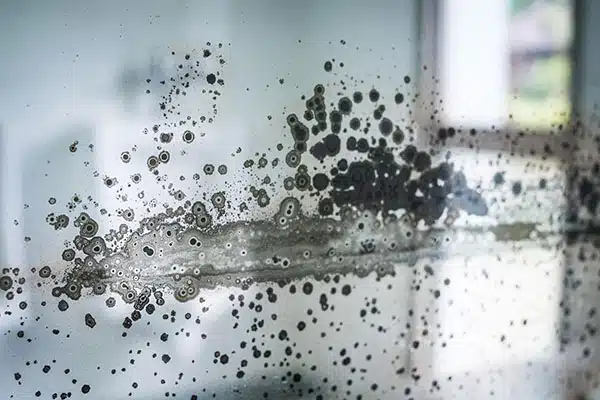
Interior spots tell a different story. Random black patches away from the edges usually mean the paint backing was physically damaged (a scratch during installation, a chip from a hard knock, or corrosive cleaner that ate through from behind).
Ammonia-based glass cleaners, including standard Windex, are a common culprit. If the cleaner drips behind the frame or runs down the edge, it contacts the backing directly and accelerates corrosion at that point.

How to Prevent Mirror Deterioration Before It Starts
The chemistry process requires moisture and sulfur to reach the silver layer, so every prevention strategy targets one or both of those inputs.
Ventilation is the highest-leverage action. Run your bathroom exhaust fan during every shower and for 15 minutes after. This removes humid air before it condenses on the mirror surface.
If your bathroom has no exhaust fan, cracking a window achieves the same result. Aim to keep bathroom humidity below 60% after showers.
Cleaning technique matters more than product choice. Spray cleaner onto a microfiber cloth, not directly onto the glass. Direct spraying sends liquid running toward the edges and behind the frame. Use a pH-neutral glass cleaner (pH 6.0 to 8.0) and avoid anything containing ammonia or bleach.
For mirrors already showing early signs of edge darkening, apply a thin bead of clear silicone sealant along the bottom and side edges. This blocks the primary moisture entry point. WD-40 applied to the edges achieves a similar short-term effect by displacing water, though silicone provides a more durable seal. Anti-fog mirror sprays also reduce condensation buildup on the glass face.
When buying a new mirror, look for copper-free backing. Manufacturers who use it will say so in the product specs. It costs slightly more but eliminates the copper corrosion pathway entirely.
Resilver, Replace, or Live With It: Making the Right Call
Once black spots appear, no cleaning product will remove them. The silver is chemically converted to silver sulfide beneath the glass. Scrubbing, polishing, and miracle sprays do nothing.
Professional resilvering costs $20 to $50 per square foot. For a standard 24×36 inch bathroom mirror, that runs $120 to $300. A brand-new bathroom mirror of the same size costs around $60, so replacement wins on price for standard mirrors.
Resilvering makes sense in specific cases. Antique mirrors with period glass, custom-shaped mirrors fitted to unusual spaces, and pieces with sentimental value all justify the higher cost. The glass itself is what you are preserving.
DIY resilvering kits cost less than professional service but require a full weekend of chemical stripping, re-coating, and drying. For a first attempt, practice on a small mirror before committing to your main piece.
A fourth option is reframing. A new frame sized to overlap the damaged edges hides the deterioration cheaply. It does not stop the underlying chemistry, but it buys time while you decide on a permanent fix.
FAQ
Can you remove black spots from a mirror?
No. Black spots are silver sulfide formed beneath the glass surface. The silver layer is permanently converted. Your options are professional resilvering ($20 to $50 per square foot) or replacing the mirror entirely.
Do black spots on mirrors spread over time?
Yes. Once the protective backing is breached, moisture continues reaching the silver layer and the affected area grows outward. Sealing exposed edges with silicone sealant can slow the spread, but it will not reverse existing damage.
Is Windex safe to use on mirrors?
Windex contains ammonia, which corrodes mirror backing if it seeps behind the edges or frame. Use a pH-neutral glass cleaner (pH 6.0 to 8.0) instead, and spray it onto your cloth rather than directly onto the glass surface to prevent runoff reaching the backing.
How long should a bathroom mirror last before desilvering?
A quality mirror with copper-free backing and proper care lasts 15 to 20 years. Budget mirrors with thin coatings may show black spots within 5 to 10 years, especially in high-humidity bathrooms without adequate ventilation.
Is it worth resilvering a mirror or should I just replace it?
For standard bathroom mirrors, replacement is almost always cheaper. A new mirror costs around $60, while professional resilvering runs $120 to $300 for the same size. Resilvering is worth it for antique mirrors, custom-shaped glass, or sentimental pieces.
What is the difference between mirror foxing and desilvering?
Foxing produces small, scattered brown or gray spots, typically on antique mirrors where moisture has been trapped under aging coatings for decades. Desilvering creates larger black patches from silver sulfide degradation and spreads progressively. Foxing tends to be cosmetic and localized, while desilvering continues expanding once started.